
rdInst Tutorial 35 – Baking Spawn Data from Procedural Volumes
Last Updated: 18th February 2024
Tutorial Created using rdInst version 1.35
Tutorial using UE5.3 or above
Sometimes creating your procedural volumes can take quite a number of frames, and cause stuttering when dynamically loading them in.
The rdSpawnStuffActor can be used in situations like this – it’s blindingly fast at spawning – even spawning tens of thousands of instances doesn’t make it blink.
This tutorial shows how you can use rdBPtools (version 1.12) to convert Actors in the level and instances in Procedural Volumes such as PCG (and Foliage Volumes) into rdSpawnStuffActors with baked spawn data.
Step 1. Create a level
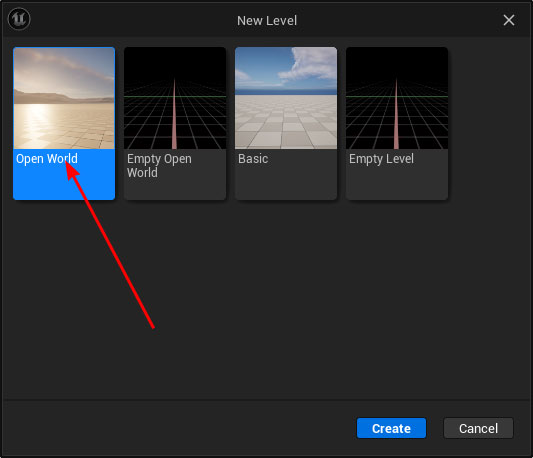
Create a new Level based on the Open World Template
Step 2. Create a new PCG volume
Now we create a simple PCG volume with a few trees.
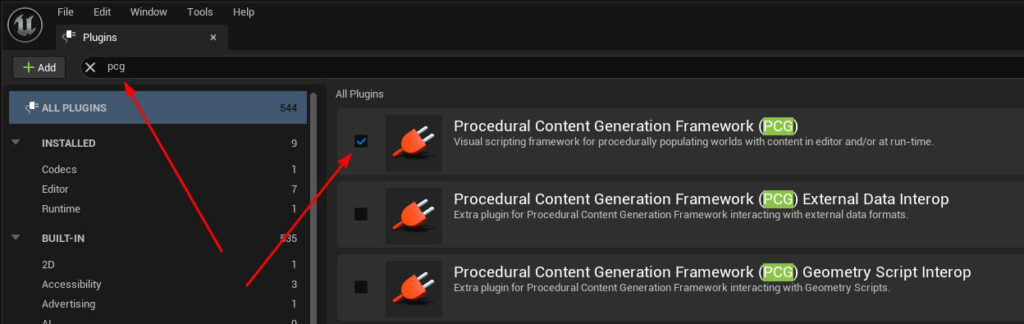
The first thing to do is make sure that the PCG plugin in enabled, if not – enable it:
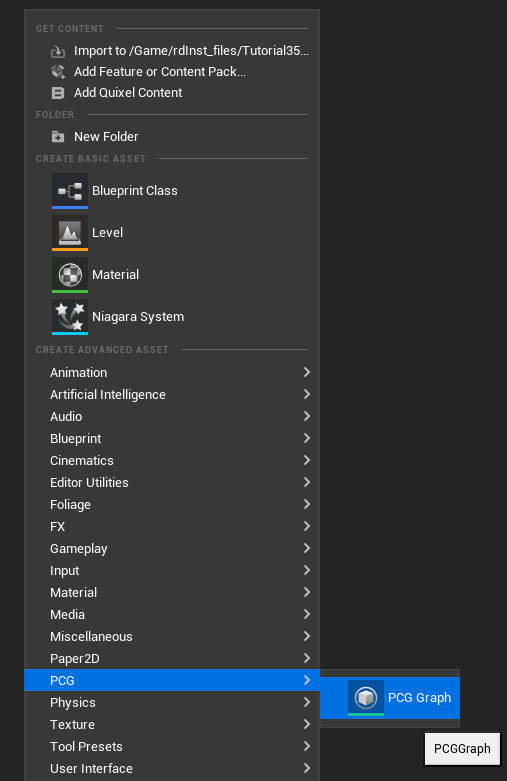
Then right-click in the Content Browser and select New “PCG Graph”
Open that up, and now add the code as below:
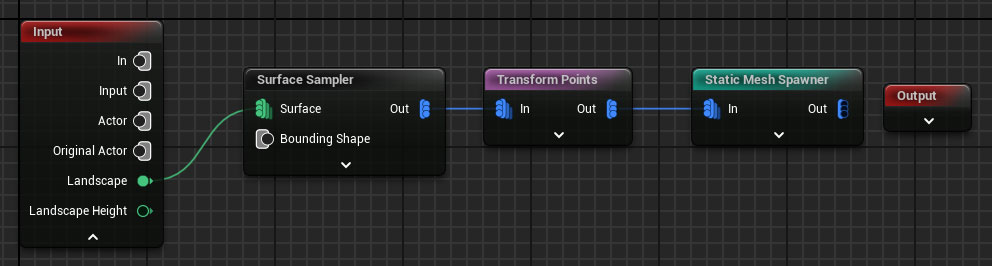
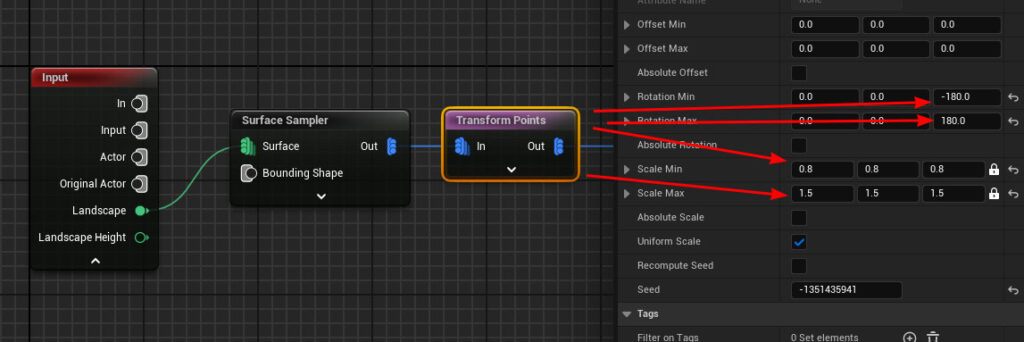
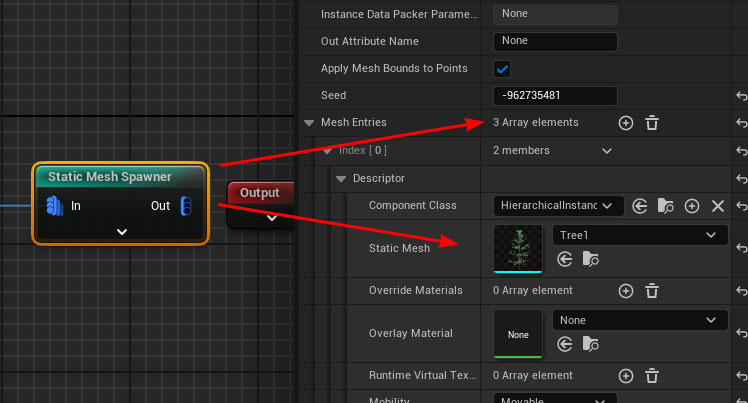
Add some variation in the Transform Points node, and add 3 meshes in the Static Mesh Spawner, point to our tree meshes.
Now drag the new PCG Graph into the level to create a PCG Volume;
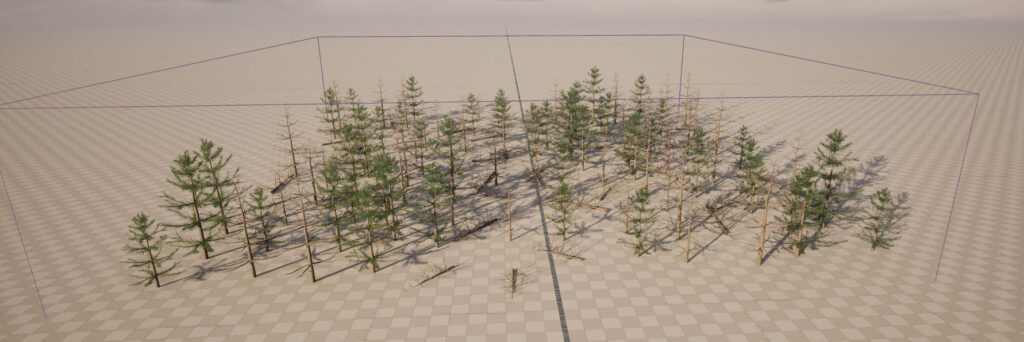
Step 3. Bake the PCG volume into a rdSpawnStuffActor
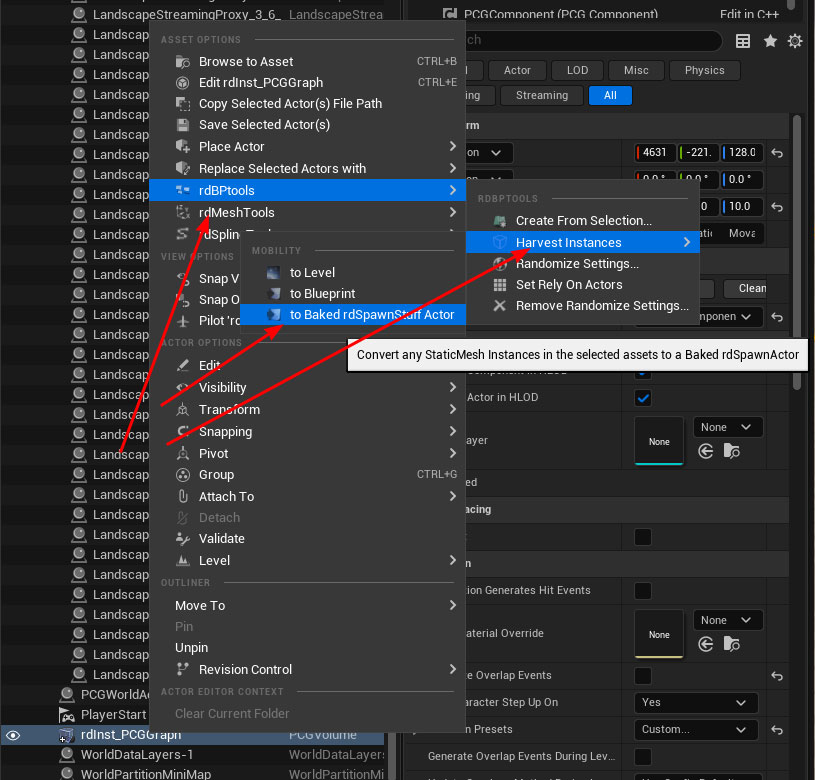
This next bit uses rdBPtools to harvest the PCG instances into a new rdSpawnStuffActor – everything is baked into the actor ready for spawning.
Note: For it to work, you must place at least one “rdActor” based actor in the level.
Find the PCG volume in the world outliner and right-click – then select the “rdBPtools->Harvest Instances->to Baked rdSpawnStuff Actor”